The Rostov Miracle
For 68 minutes, the "Golden Generation" looked like rusted metal. Belgium were not just losing; they were being tactically dismantled. The Rostov Arena had fallen into a stunned silence, broken only by the rhythmic chanting of the Japanese ultras. Two goals down. Twenty minutes left. The weight of a nation's legacy hung heavy on players who had been promised the world but were delivering a nightmare.
This wasn't supposed to happen. But in the World Cup, the margin between humiliation and immortality is often measured in seconds. Specifically, the 14 seconds it took to turn a Japanese corner kick into one of the most ruthless counter-attacks football has ever seen.
Starting Line-Ups
Belgium Starting XI (3-4-2-1)
Thibaut Courtois (GK); Toby Alderweireld, Vincent Kompany, Jan Vertonghen; Thomas Meunier, Kevin De Bruyne, Axel Witsel, Yannick Carrasco; Dries Mertens, Eden Hazard (C); Romelu Lukaku.
Japan Starting XI (4-2-3-1)
Eiji Kawashima (GK); Hiroki Sakai, Maya Yoshida, Gen Shoji, Yuto Nagatomo; Makoto Hasebe (C), Gaku Shibasaki; Genki Haraguchi, Shinji Kagawa, Takashi Inui; Yuya Osako.
The wing-back roles in Belgium's 3-4-2-1 would prove to be the tactical vulnerability that Japan exploited mercilessly in the first half.
Early Match Flow
The first half was a mirage of control. Belgium held the ball, circulating it sluggishly through a crowded midfield, but Japan's 4-4-2 defensive block was impenetrable.
Hazard dropped deep, trying to pull strings, but the heatmap told a worrying story: Belgium's possession was U-shaped, stuck on the periphery, unable to penetrate the "Red Zone" (Zone 14). Japan, meanwhile, waited. Every time they won the ball, Kagawa and Inui sprang into the pockets of space left behind by Belgium's high-flying wing-backs, Carrasco and Meunier. The foreshadowing was subtle, but the fragility was real.
Key Moments / Turning Points
48' – Japan 1–0 Belgium (The Shock)
A defensive error by Jan Vertonghen allowed Genki Haraguchi to sprint clear. He drilled the ball past Courtois. The shock was palpable. 0–1.
52' – Japan 2–0 Belgium (The Panic)
Takashi Inui found space in the center and unleashed a swerving, dipping strike from 25 yards. Belgium were reeling. 0–2.
"For four minutes, Belgium's Golden Generation stared into the abyss. The dream of finally delivering on their promise was slipping away."
69' – Belgium 1–2 Japan (The Lifeline)
Jan Vertonghen's looping header from 20 yards out—arguably accidental—dropped perfectly into the far corner. Hope flickered. 1–2.
74' – Belgium 2–2 Japan (The Equalizer)
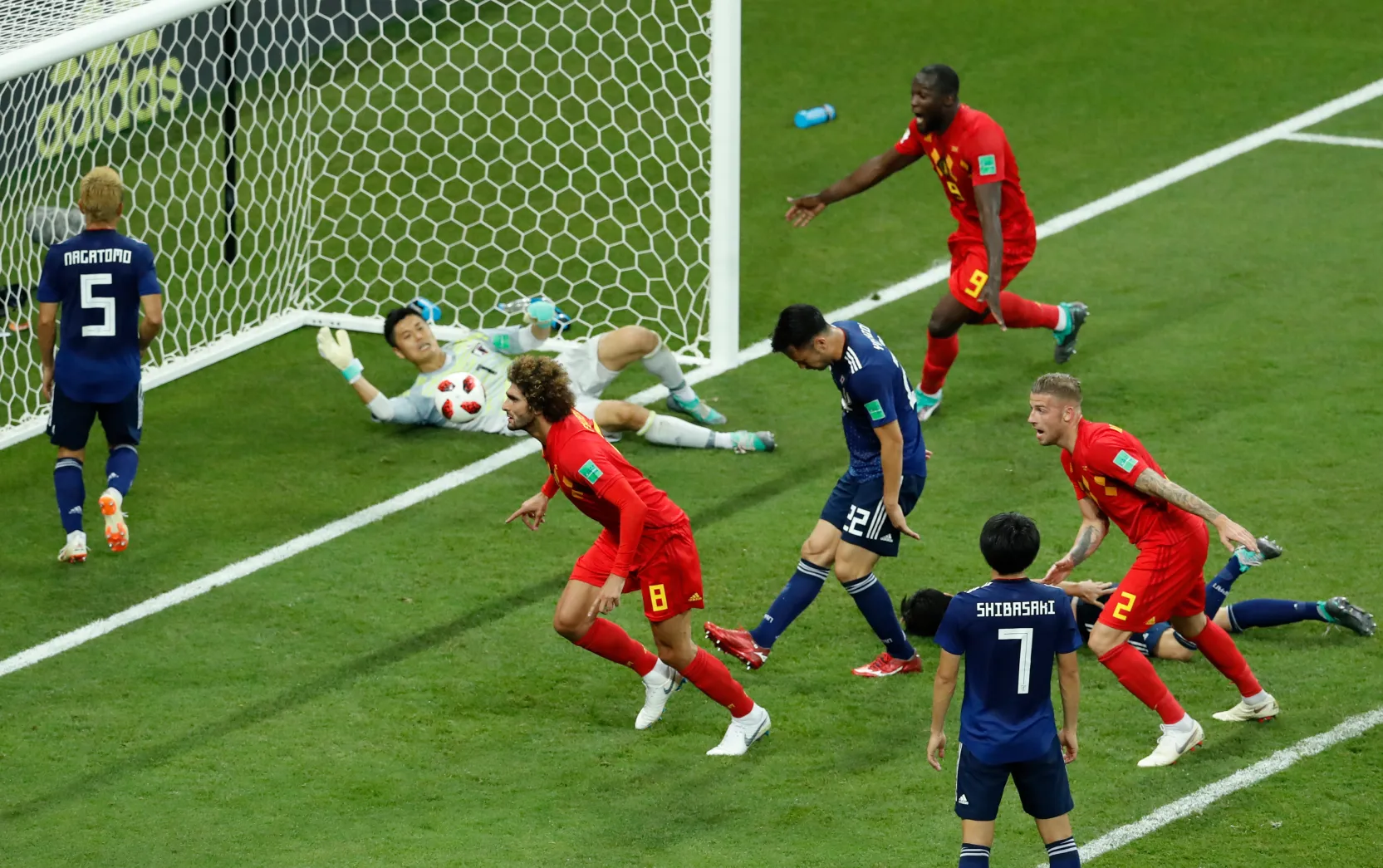
Marouane Fellaini, the substitute, used his physicality to power home an Eden Hazard cross. The tactical switch to "Plan B" had worked. 2–2.
90+4' – Belgium 3–2 Japan (The Dagger)
A failed Japanese corner. Courtois rolls it out. De Bruyne drives. Meunier crosses. Lukaku dummies. Chadli finishes. 3–2. Game over. Fourteen seconds. Immortality.
Discipline & Pressure
Remarkably, this match was defined not by dirty play, but by the crushing weight of mental pressure.
- Cards: The game was incredibly clean (only 3 yellow cards total), highlighting the tactical discipline of both sides.
- The Mental Shift: After the equalizer, panic crept into Japan's decision-making. Usually composed, veteran goalkeeper Kawashima looked hesitant on crosses.
- The Fatal Mistake: Japan's decision to commit men forward for a corner in the 93rd minute, rather than playing for extra time, was a lapse in discipline born of a desire to win, not survive. It cost them everything.
Player Highlights
Heroes
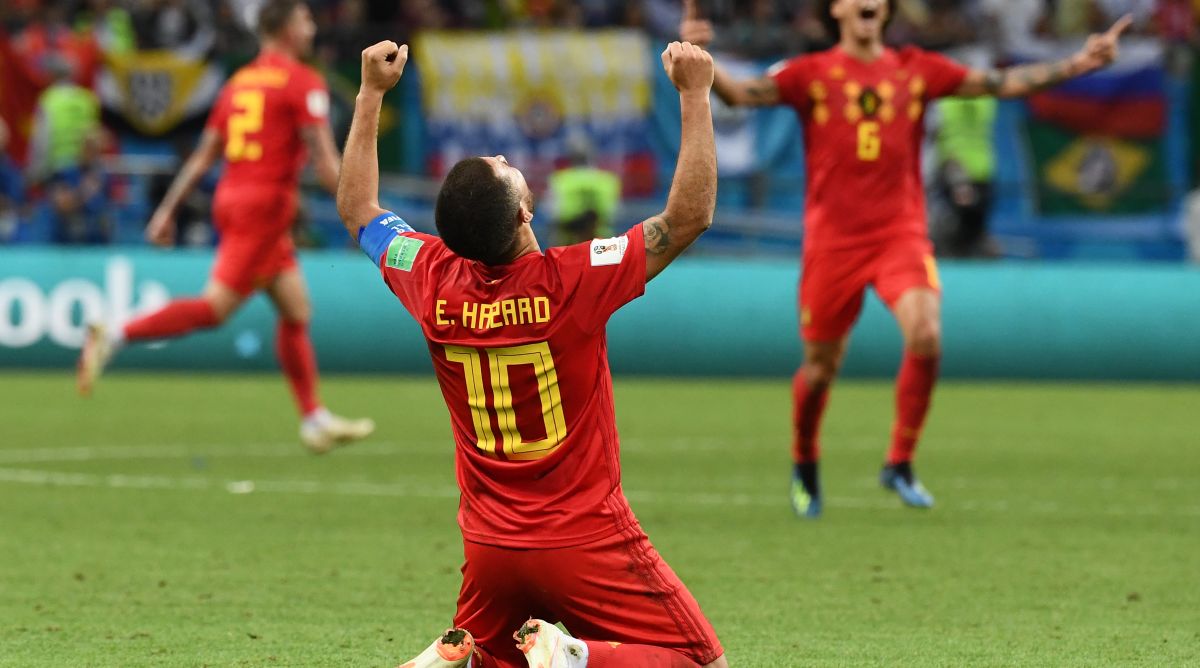
- Eden Hazard: The engine. While others panicked, he hit the post and provided the crucial assist for the equalizer.
- Romelu Lukaku: Played the entire match as a target man but is remembered for the touch he didn't take—the brilliant dummy that cleared the path for Chadli.
- The Substitutes (Fellaini & Chadli): Martinez's changes turned the game. Fellaini's physical presence and Chadli's composure were decisive.
Struggles
- Yannick Carrasco: Exposed defensively at wing-back throughout the first half; his substitution was the catalyst for defensive stability.
- Eiji Kawashima: While he made saves, his command of the area on aerial balls (Belgium's primary weapon late in the game) was shaky.
Tactical Analysis: Martinez vs Nishino
The Failure of Plan A
Belgium's initial 3-4-2-1 left them vulnerable in transition. The "half-spaces" behind the wing-backs were a highway for Japan's counters. Kagawa and Inui repeatedly exploited the gaps left by Carrasco and Meunier.
The "Plan B" Masterclass
Roberto Martínez realized finesse wasn't working. He introduced Marouane Fellaini and Nacer Chadli, shifting to a more chaotic, physical approach.
- Aerial Bombardment: Belgium stopped trying to pass through the middle and started crossing. Japan's center-backs, Yoshida and Shoji, were physically overwhelmed.
- The High Line: Belgium pushed their defensive line to the halfway line, compressing the pitch and forcing Japan deep into their own box.
The visual shift was dramatic: activity moved from central midfield passing (first half) to high-volume crossing from the flanks (second half).
Match Stats
While the narrative suggests total dominance, the stats paint a picture of efficiency. Belgium held 56% possession (not 70%), proving Japan contested the midfield battle fiercely.
| Category | Belgium | Japan |
|---|---|---|
| Goals | 3 | 2 |
| Possession | 56% | 44% |
| Shots (On Target) | 24 (7) | 11 (4) |
| Corners | 5 | 6 |
| Shot Conversion | 12.5% | 18.2% |
Belgium fired 24 shots to Japan's 11, but Japan's efficiency was lethal—4 shots on target resulting in 2 goals. The 6th corner Japan took was the catalyst for their exit.
Implications / Pressure on Next Match
Next Opponent: Brazil (Quarter-Finals)
Surviving Japan felt like a stay of execution. Now, the "Real Final" awaited in Kazan against Brazil. The media pressure was suffocating.
The "Golden Generation" had proven they had heart, but the defensive fragility exposed by Japan suggested that Neymar and Coutinho would feast on them. There was no room for error; the margin for failure was gone. A nation held its breath, knowing their defense had to improve overnight.
Conclusion
The "Rostov Miracle" remains the definitive moment of Belgium's modern era. It wasn't just a win; it was an exorcism of the "chokers" tag that had plagued them.
For Japan, it was a heartbreak that birthed a new philosophy—leading directly to their "Blue Lock" era of striker development and their giant-killing feats in 2022.
"In the end, tactical systems crumbled, and stats became irrelevant. It came down to a goalkeeper's throw, a sprinter's lungs, and a dummy that fooled the world."